
M45 — The Pleiades (The Seven Sisters)
Captured with: Seestar S50 Smart Telescope
Distance: ~440 light-years
Constellation: Taurus
Type: Open Star Cluster with Reflection Nebula
Apparent Size: ~110 arcminutes
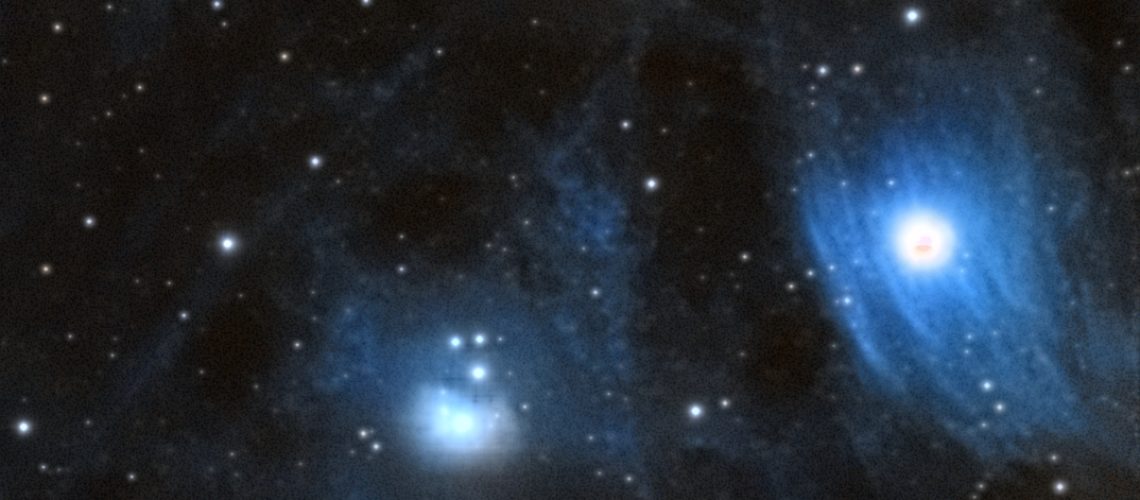
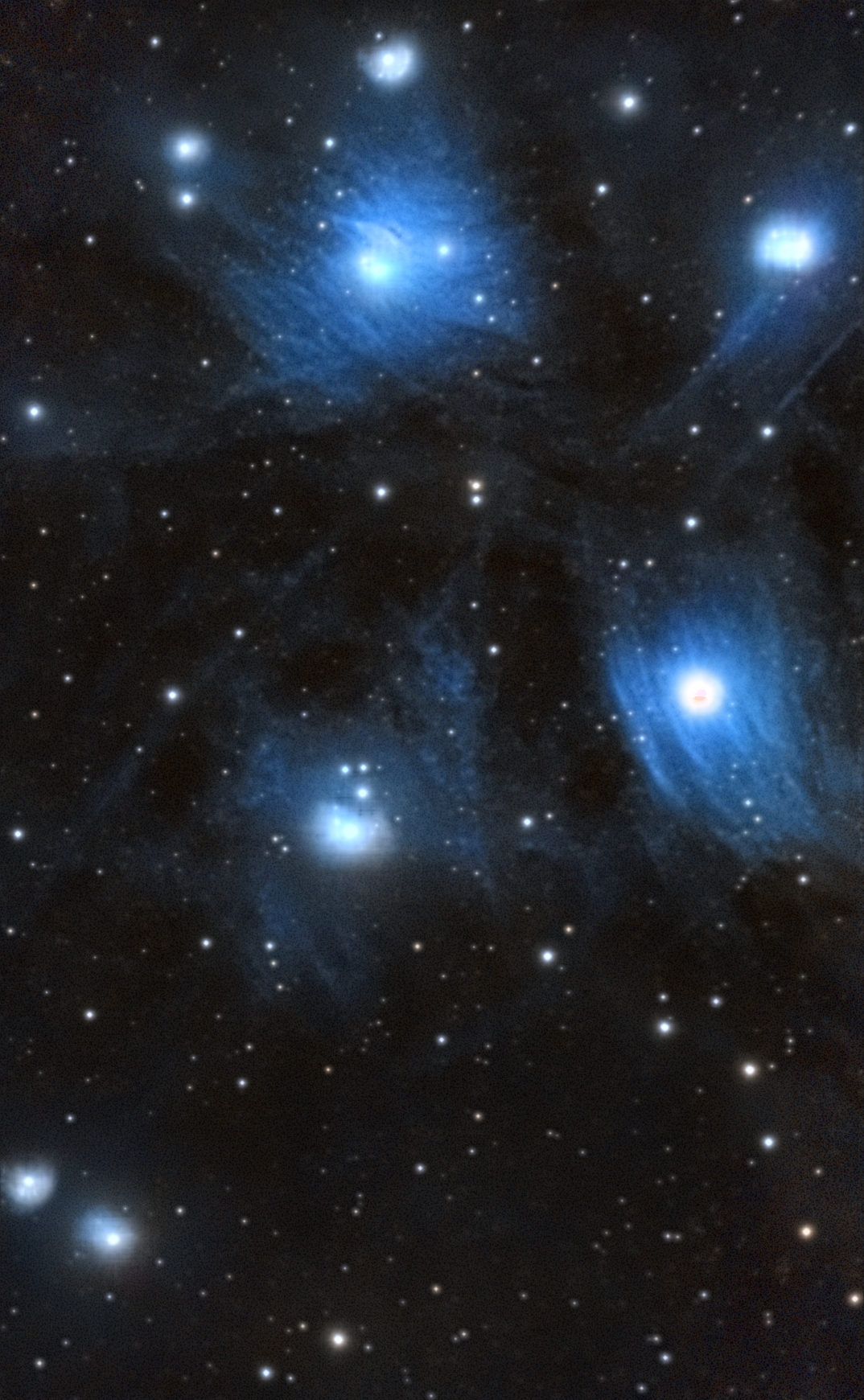
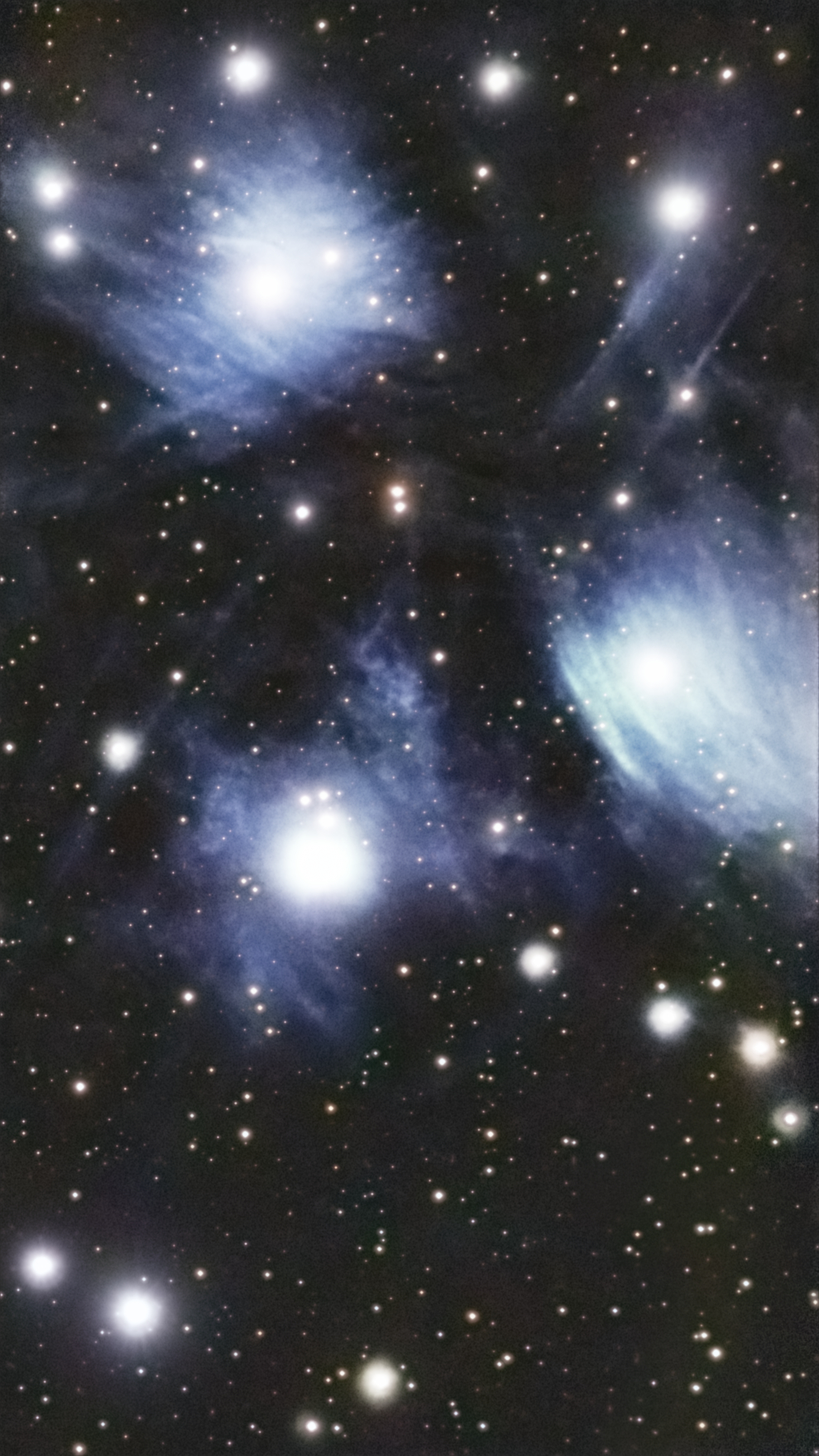
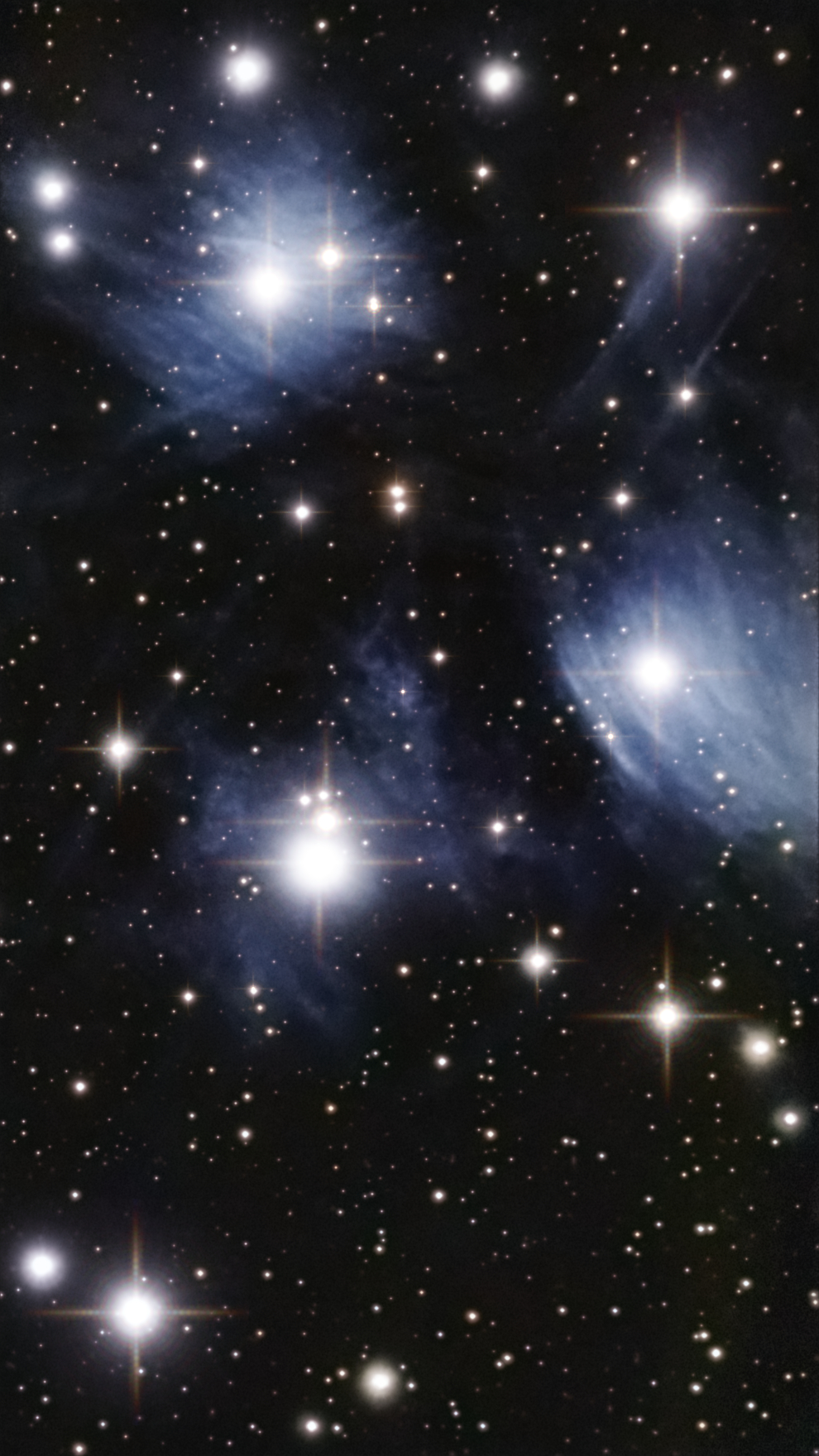
The Pleiades star cluster, known since antiquity and celebrated in cultures across the world, is one of the nearest and most striking open clusters in the Milky Way. To the naked eye, it appears as a tiny dipper-shaped group of bright blue-white stars, but through your Seestar S50, it reveals a gossamer web of reflection nebulae — fine blue dust illuminated by starlight.
The cluster contains more than 1,000 stars, though only a handful are visible without optical aid. The brightest — Alcyone, Maia, Electra, Taygeta, Celaeno, Sterope, and Merope — give the Pleiades their mythological name, the Seven Sisters. Each of these stars is young, hot, and massive, only about 100 million years old, making the Pleiades a stellar nursery in its prime.
The surrounding blue haze is not gas emitted by the stars themselves but interstellar dust that reflects their light — a phenomenon known as a reflection nebula. The faint filaments you’ve captured are sunlight scattered by microscopic dust grains, similar in scale to smoke particles.
Astronomers estimate that the Pleiades will gradually disperse over the next 250 million years, as gravitational interactions slowly pull its members apart. But for now, it remains one of the most beautiful and familiar clusters in the sky — a bridge between myth and science, linking the stories of ancient observers to the data of modern telescopes.