
The Moon — Earth’s Nearest Neighbor
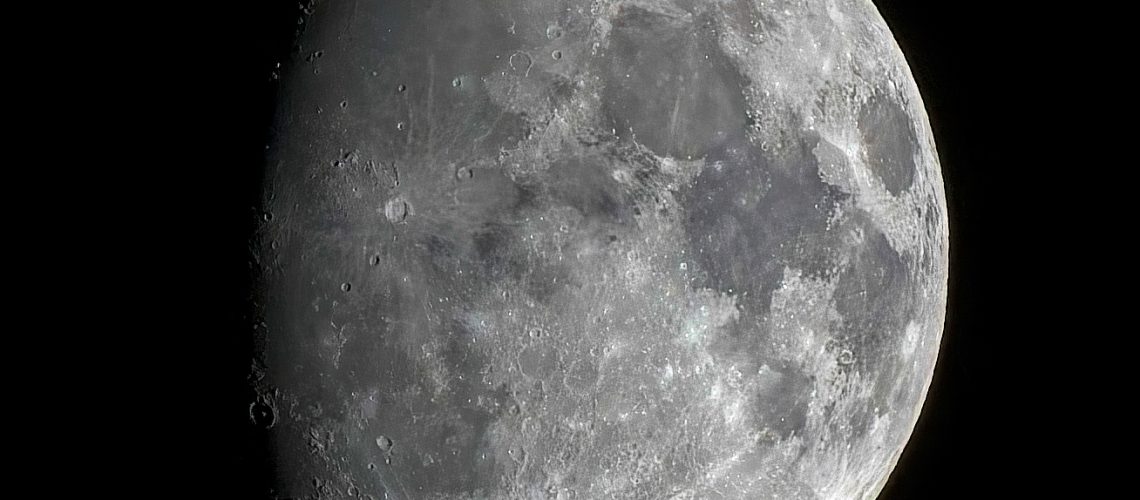
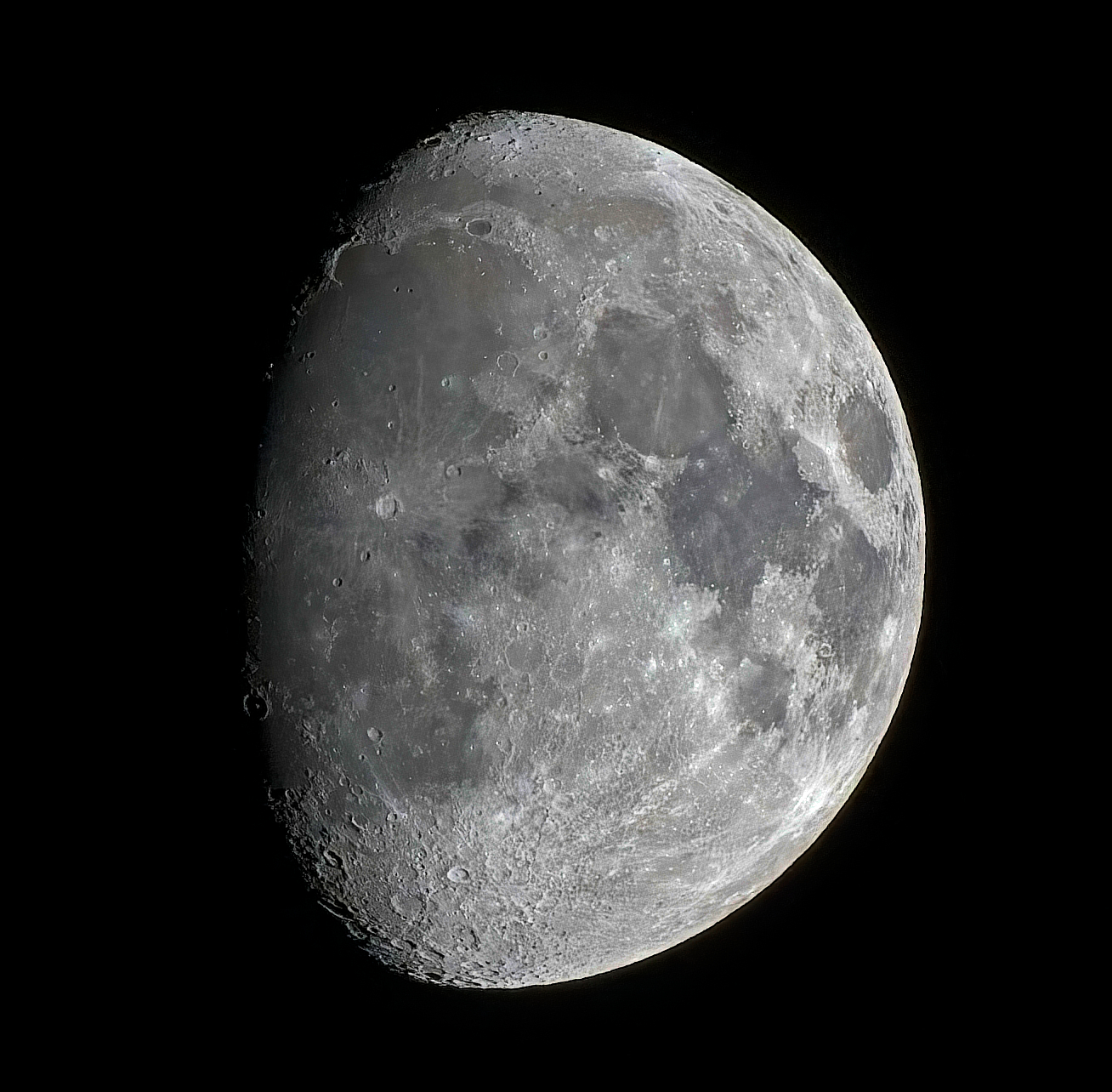
Captured with: Nikon D850. 500mm (Nikon AF-S Nikkor 200-500mm f5.6E ED VR).
ISO3200, 1/6400, f5.6
Average Distance: ~384,400 km
Diameter: 3,474 km
Orbital Period: 27.3 days
The Moon is our constant companion, orbiting Earth once every month and reflecting the sunlight that gives night its gentle glow. Through the Seestar S50, what appears to the naked eye as a smooth disk transforms into a rugged world scarred by billions of years of cosmic history.
The darker plains, called maria (Latin for “seas”), are ancient basaltic lava flows that filled vast impact basins more than three billion years ago. The lighter regions, known as the lunar highlands, are older and heavily cratered, marking some of the oldest terrain in the Solar System. Prominent craters such as Tycho, Copernicus, and Clavius show bright ray systems — streaks of ejected material flung outward by immense impacts.
Because the Moon’s rotation period matches its orbit around Earth, we always see the same face — a phenomenon called tidal locking. Yet, subtle wobbles known as librations let us glimpse about 59% of its total surface over time.
Every photograph of the Moon is a snapshot of dynamic stillness — a surface frozen in time, yet constantly influencing life below through its gravitational pull, driving the ocean tides and stabilizing Earth’s axial tilt. It’s our first stepping stone into space, and still one of the most scientifically rich and visually striking worlds to explore through a telescope.